
Jun 21, 2011
AK Party won, now Kurds win; here’s why

The Justice and Development Party’s (AK Party) landslide victory by almost 50 percent of the vote once more raises the long-standing Kurdish question.
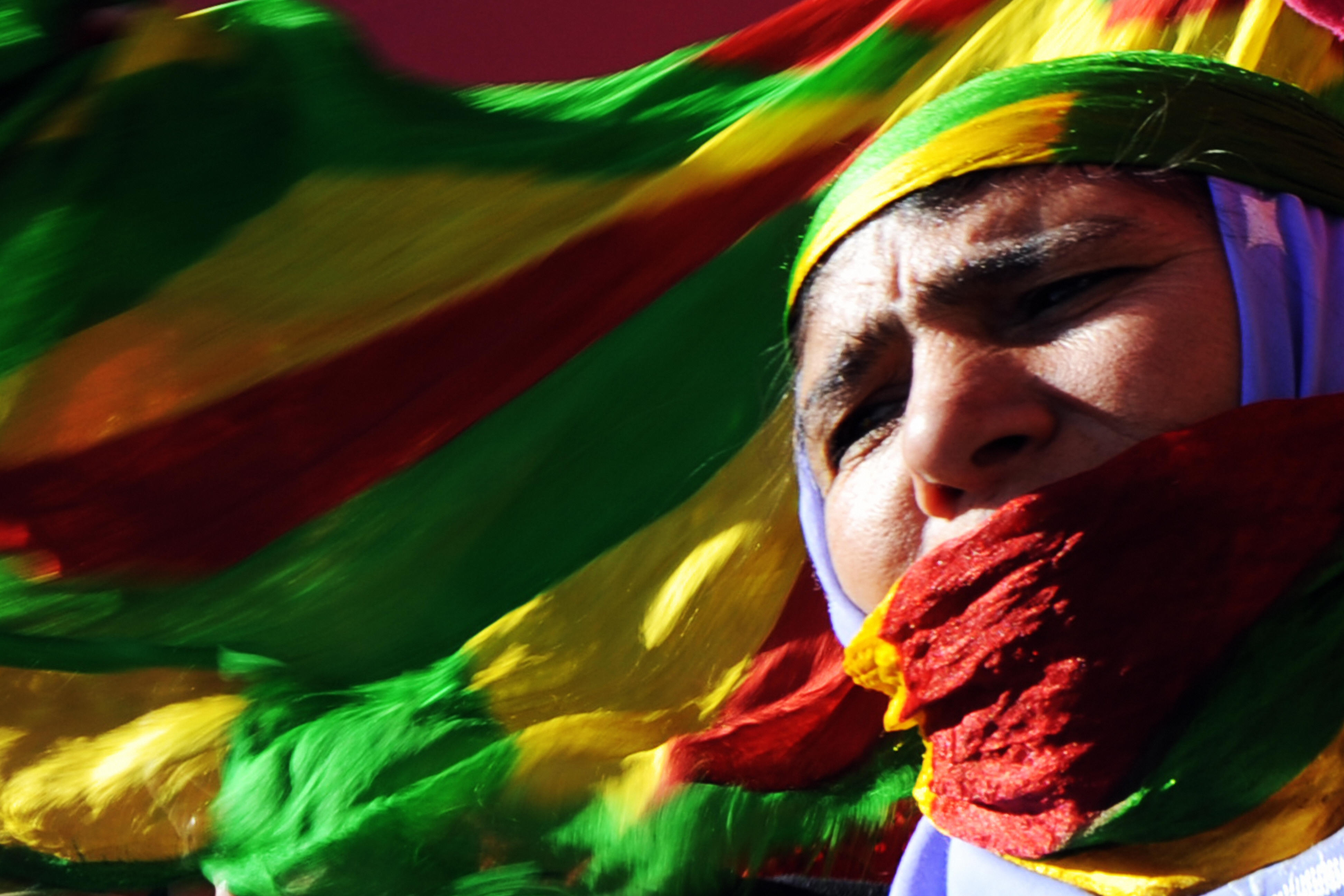
Cities in Turkey’s Southeast, which are mostly inhabited by Kurds, sent a clear message to the victorious prime minister, Recep Tayyip Erdoğan, by mainly voting for the pro-Kurdish Peace and Democracy Party (BDP). Even though the AK Party secured around 30 seats in predominantly Kurdish cities, close to the BDP’s 36 seats, this result is still considered a weak performance by the AK Party compared to previous results, especially in the conservative city of Diyarbakır, the biggest in the Southeast. However, expectations are high for solving the Kurdish issue through a reform of the Constitution and economic benefits for the region.The AK Party government started a so-called “democratization process,” which mainly was an opening process toward Kurds and other minorities through raising democratic standards. During the AK Party era ascendant steps have been taken; yet many more steps should follow for a radical solution of the decades-long Kurdish issue. Undoubtedly, the prime minister’s steps paved the way for Kurdish rights — reflected in liberal policies and infrastructure improvement in Kurdish cities. However, when some bigoted nationalists tried to provoke the process, Prime Minister Erdoğan pushed to halt the process.
After the AK Party’s historic victory, some real challenges face Erdoğan — especially preparing a new constitution. The Kurdish issue is expected to top the agenda, and this issue will collide with Turkish nationalists’ fierce rejection. Yet, we should be sanguine about expectations on the Kurdish question because during his nine years of rule, Erdoğan has proceeded with some resolute steps with unprecedented fortitude such as liberalizing policies and opening a round-the-clock Kurdish TV channel. The new AK Party-led government is trying to solve the most sensitive issue in modern Turkish history gradually and smoothly. Any provocation may get Turkish nationalists angry, aggravate the situation and lead to a stalemate. Additionally, despite all the challenging obstacles, there are signals for a more Kurdish-friendly constitution to end the bloody conflict in southeastern Turkey. Below, I will present short and simple but realistic reasons why I’m optimistic about the AK Party’s solution for the Kurdish question.
At the top of Erdoğan’s agenda for the next period is the new, promised civilian constitution. The most challenging matter to tackle is clearly going to be the Kurdish question — the issue Mr. Erdoğan always wanted to see addressed peacefully. Kurds will get their cultural and political rights with the new constitution. Mr. Erdoğan promised to write a more democratic and liberal constitution — and Kurds are going to be the main beneficiaries of this. Also, there will be exclusive and radical changes in the new constitution for the sake of Kurds and other minorities. The first beneficiaries of individual rights are going to be Kurds and other minorities. However, that’s not going to threaten Turkey’s unity because when Kurdish citizens feel they are equal with Turks and other citizens, they will be proud of their citizenship. Furthermore, as Turkish President Abdullah Gül has indicated on many occasions, diversity is a source of a richer Turkey and not vice versa; that’s what Turkish nationalists, if they really love Turkey, should understand — a more diverse Turkey means a richer Turkey. Moreover, Mr. Erdoğan’s plan for 2023 is very hard to achieve without Kurds because Kurds comprise at least 20 percent of Turkey’s population. So Mr. Erdoğan should consider Kurds as an important factor for his 2023 plan, and he has already done so. Mr. Erdoğan in his campaign rally in Ankara announced his plan for Diyarbakır, which will make this city a financial and tourism hub. Changing the constitution and implementing the “AK Party’s 2023 vision” will solve all political, cultural and economic issues.
These two radical reasons along with what was achieved previously through the “democratization process” and the AK Party leadership’s desire for a solution will put an end to the Kurdish issue, but the road won’t be straightforward, especially given the ultranationalists’ attempts to create problems along the way and depict the matter as grim or a taboo subject that will ruin Turkey’s national unity. However, in the end, wisdom, moderation and tolerance will win, and Mr. Erdoğan’s strong will will gently do away with the hurdles. The pro-Kurdish Kurdistan Workers’ Party (PKK)-backed BDP should also avoid provocative methods that might gridlock the bleeding wound or damage all the steps that have been taken so far; if not, the BDP will only have itself to blame.
This article has been published on Today's Zaman:
http://todayszaman.com/news-247755-ak-party-won-now-kurds-win-heres-why-by-abdulla-hawez-abdulla*.html
This article has been re-published on Middle East Youth:
http://www.mideastyouth.com/2011/06/20/why-turkey%E2%80%99s-ruling-ak-party-should-solve-kurdish-issue/
This article has been re-published on Middle East Online:
http://www.middle-east-online.com/english/?id=46857
This article has been re-published on eKurd:
http://www.ekurd.net/mismas/articles/misc2011/6/turkey3264.htm
This article has been re-published on Kurdish Globe:
http://www.kurdishglobe.net/display-article.html?id=43FA1FE55EE73D22070E490ED2EC1FC9
Jun 5, 2011
Republic of Kurdistan; The first glimmer of hope that demised early

Kurds in 1920 were nearest to statehood than ever as outcome of the Treaty of Sevres. It envisaged interim autonomy for the predominantly Kurdish areas in Turkey and the British-occupied province of Mosul (current Iraqi Kurdistan area). But, the possibility for such a state never occurred, since Kemal Ataturk renounce submission at Sevres. He started a revolution against the Christian forces and drove them out. Then, Kurdistan became four parts. The dream of independent Kurdistan dramatically demised, and the inception of brutal suppression employed. One of four parts of Kurdistan consist modern Iran. Although government of Iran hasn’t implemented same level of brutality as its counterpart in Turkey, yet, it has always been opposed any suggestion of Kurdish separation. Iran has had greater reasons than Turkey to oppose such a step, because it has had more large minorities such as Arabs and Azeries. From the beginning, Iranian authorities allowed Kurds to use their own language and express their culture openly. It’s noteworthy to say, however, that Kurds are around 10 percent of Iran’s population, less than other large minorities such as Turkics and Baluchies. Unlike Turkey and Iraq, however, Kurd’s land in Iran has less demographic share. Kurds in all four parts have almost no vital activity for independence that might be because of brutal suppression of central governments. At the late of 1930s and the beginning of 1940s, affected by European antinationalism, nationalist Kurds emerged. At the beginning of 1940, nationalism beside communism became a favorable common ideology.
As a result of World War two in late August 1941, British troops occupied southern part of Iran, with the Soviets controlling the north. The aim of the occupation was to dislodge Shah of Iran who the Allies forces suspected would turn his pro-German sympathy into Military Corporation. There was no Iranian government at that time. In the absence of a Central government, the Soviets tried to attach northwestern of Iran to the Soviet Union. City of Mahabad which mostly inhabited by Kurds wasn’t occupied by any of the forces that led to vacuum of power. Soviet promoted nationalism amongst Kurds. These factors made Kurds think about self-governing for Kurds within the Iranian state. In 1942, as a result of vacuum of power, a committee supported by tribal leaders took control over the administration of the city. Later at that year, a nationalist political party formed, called the Society for the Revival of Kurdistan (its Kurdish original name was, Komalay Jiyanaway Kurdistan or JK). Qazi Muhammad, member of a respected family in Mahabad elected as the chief of the new party. The party was under Soviet influence, but not control. Then, however, before the declaration of Kurdistan republic, the party elected a committee that started administering the area. The JK’s administration was successful for over five years until the fall of the republic. In 1945, the Kurdistan Democratic Party had started; all member of JK joined the new party. The new party asked for autonomy for Kurds whining the Iranian state not an independent one, Kurdish as an official language and asked for democracy in local administration. Generally, Soviet’s attitude toward Kurdish administration was ambivalent, and they didn’t support it clearly. Kurdish successful administration under Qazi Muhammad’s rule enhanced every aspect in the people’s life in this area.In September 1945, Qzi Muhammad and other Kurdish leaders visited Soviet’s consul in Tabrez to seek for a new Kurdish republic, and they went to Azerbaijan for the same purpose. There they found that Azerbaijan’s Democratic Party is seeking a republic in Iranian Azerbaijan. On December 10, Azerbaijan’s Democratic Party took control over the East Azerbaijan province from Iranian troops and declared a republic; likewise, Qazi Muhammad decided to take the same step. After five days, on December 15, Kurdish people’s government was found in Mahabad. On January 22, 1946, Qazi Muhammad proclaimed the republic of Kurdistan in Mahabad. According to the republic’s Manifesto, they aimed to gain autonomy from Kurds inside the Iranian state, Kurdish become an official language in the area, electing locals to all official positions and unity and fraternity with Azerbaijanis. The republic was never seeking for independence out of Iranian limits. They aimed to gain autonomy and self-governing whining Iran. Kurdish printing spread throughout the area and a lot of publication were printing in the republic. That boosted the education and printing media in the area. Economically, even though, Soviet hadn’t done much to support Kurdistan republic in Mahabad, but it had an important rule in protecting the borders of the republic from Iranian forces’ intervention. Also as a kind of encouragement for the new-born republic, Soviet was buying the whole of the tobacco that was producing from that area. But regarding the military corporation, Soviet, neither did train the Kurdish republic’s fighters nor did supply them by weapons.
On March 26, 1946, under the pressure of Western powers especially United States, the soviets pledged the Iranian government to withdraw from northern Iran. This step was the beginning of the end of both Mahabad and Azerbaijan republics. Firstly, in June, Iranian forces re-controlled the Iranian Azerbaijan. That was slow killing for Kurdistan republic of Mahabad. The republic isolated from all sides, eventually led to destruction of first and only Kurdish republic in the modern history. The main reason behind the republic’s destruction is clear, Soviet withdrawal from northern Iran, but there are some internal reasons as well. The Kurdistan republic hasn’t had a strong army. General Mustafa Barzani was the commander-in-chief in the republic’s government, but he didn’t have strong enough army to protect the republic from Iranian threats. The army was formed from voluntarily non-trained fighters. Another reason of Kurdistan republic’s collapse is tribal disagreements, a problem that all Kurdish movements suffered from throughout the history. During the republic’s governing, tribal chiefs didn’t help the republic because of their relation with the central government. Ironically, tribal leaders helped the Iranian forces to topple the Kurdistan republic in Mahabad that’s despite, they were Kurds. Tribal chiefs support for Iranian government instead of Kurdistan republic was disenchantment and fatal for the republic in the military aspect.
Diplomatically, likewise all other Kurdish movements, the Kurdistan republic’s ruling Kurdistan Democratic Party failed to gain support from superpowers. Although Soviet, one of the main powers at that time encouraged the foundation of Kurdistan republic, but when western powers pressed on it to pull out from Iran, it never thought about Kurdish and Azerbaijani republics because they never had a strategic alliance. Also, western powers especially United States did support Iranian government precisely because they didn’t have other choices. Kurds took Soviet’s side; they never attempted to gain western sympathy. There was a possibility of Western power’s support for Kurdish state if they asked their support; because of one reason which is they weren’t Iranian alliance either. Qazi Muhammad and other republic leaders’ insist of relations with Soviet led to republic’s demise. Some may say politics is like a card sometime the winds mayn’t blow in your favor, but the problem in republic’s case is they even didn’t pick a card to test their chance. The absence of accurate diplomatic skills together with tribal chiefs’ embroiled in fighting with their brothers led to Kurdistan republic’s demise.
The foundation of Kurdistan republic in Mahabad, first and only Kurdish republic in modern history, led to a crackdown aftermath. But it hasn’t finished the glimmer of hope in Kurdistan. General Mustafa Barzani after fleeing to Soviet for eleven twelve years, returned to Iraqi Kurdistan in 1958. Barzani started a new struggle for Kurdistan’s independence but this time in Iraqi part of Kurdistan. He gave another hope for Kurdish statehood. Also, in Kurdistan of Turkey the struggle started more actively in the wake of Kurdistan republic’s destruction. Iraqi Kurdistan liberated and gained self-governing with all other aims of Kurdistan republic in Mahanad. No one can deny military struggle’s role in the autonomy of Iraqi Kurdistan, but diplomatic struggle also had a vital role. Kurdish movement was sending representative to United States, western powerful countries, even to Israel to gain their support for Kurdish autonomy because they knew that they can’t achieved just by military struggle. The lake of diplomacy in other parts of Kurdistan halt their hope of self-governing. The quake of Kurdistan republic’s demise still affecting Kurds in Iran, they should wake and never lose hope, especially while the region live Arab nation’s uprising against their autocratic leaders. Kurds can invest this opportunity to gain more and more right to live in long awaited prosperous life. Moreover, the only reason that collapsed all Kurdish struggle toward self-governing is differences, so the unity and fraternity of all political parties is the guarantee of any future hope for Kurdish statehood.
* studying politics and International Relations at University of Kurdistan – Hawler(UKH)
Publish on:
http://www.mideastyouth.com/2011/06/05/republic-of-kurdistan-the-first-glimmer-of-hope-that-demised-early/
May 15, 2011
Globalization; the era of unveil-ization

The contested-concept Globalization is an old used term; first used in 1897 and later in 1952, then it became a widespread term in 1960s. “Globalization refers to a multidimensional set of social process that create, multiply, stretch, and intensify worldwide social interdependencies and exchanges while at the same time fostering in people a growing awareness of deepening connection between the local and the distant “(Steger, 2003). Some say globalization appeared with the industrialization era in United Kingdom; others say it appeared mainly after the cold war, and the raise of United States as the only superpower in the world. Globalization especially in the last ten years affected every aspect of our life. Globalization has swept all secrets; everything have revealed through media and other related tools. Because of the interconnectedness between the nations; the cultural awareness increased between nations. Yet, the era of globalization started through economy, trade and direct foreign investment. And the necessity made states to open new overland and aerial roads, so that made transportation much easier. However globalization first started and expanded through economic factors. Afterwards, others term such as political, cultural mostly through technology and media.
Globalization or as some call it globalony is a multi-side term, economy is one of the main sides of it. Economic globalization has become a phenomenon in the last 30 years; it refers to the increasing interdependence of domestic economies throughout the world in a cross-border international economy which means integration between national economies that led to emergence of a single huge global marketplace instead of tiny domestic markets. The strong interdependence of main economies in the world which lead by giant power United States has become clearer when financial crisis took place in 2009. National economy is no longer an appropriate term to use. Financial crisis revealed how the national economics linked with each other, and how pure national economy became obsolete. Some may say that’s overblown standpoint, but a quick glance over some figures makes the picture even clearer. All countries in G20 went under recession at least for one year, except China, but it became a hurdle for the huge GDP expected growth for china as well. Countries in EU and Japan which strongly linked with US until the beginning of 2011 were facing mines GDP figures. That shows how globalization overlapped the national economies in global economy.
In our current world, economy highly linked with politics; that’s why global politics emerged after global economy. Global institutions such as United Nations officially represent this new term. But some alleged, it gripped by United States and its allies. Moreover, they believe we should say neo-imperialism instead of global politics. Yet, the twin tower bombing in 11th of September, 2001 was a turning point in global politics. Rising of Al-Qaida, the international radical Jihadist network, changed the notion of international security corporation and the whole political system. United States’ Invading both Afghanistan and Iraq paraphrased the concept in more pro-American tendency. The interconnectedness of the whole states in one global system makes dictators and autocrats in a big dilemma; strengthen powerful democratic countries’ hand over the world. The aftermath of Libya dictator’s crackdown is a very clear sign how local governments can’t treat their people however they can anymore. Powerful western and international military conglomerates such as NATO are preventing massacres nowadays. A lot of pundits believe that’s strengthening western-backed democracy and human rights in the less developed countries. The military corporation between states, the intervention of global powers to halt mass crackdowns, and the active than ever diplomatic movement between states show how running even local states became an international matter.
Ostensibly, devilishly, some say globalization doesn’t exist at all; it’s Americanization and westernization. They believe, it’s just western traditions and values that hit Islamic and eastern world. These standpoints fend off overreaction from radicals to anything that comes to Islamic states even the positive ones that contributed to build new human civilization. Those can’t or don’t want to see how some Islamic values are rooting in the west; those don’t want to believe that Islam’s growing as the world’s fastest growing religion is backing to globalization and the apparatus that invented through it. Ironically, Turkish traditions and values start to replace western ones in the Middle East which yet count as globalization. The viewership of Turkish TV shows in the Arab world overpass all before records, with more than 80 million viewership. Turkish food and culture is warmly welcomed in most Arabic, Islamic and even some western countries. That’s all count under the roof of globalization. So, globalization is a combination of local and distant that may come from whatever influential and powerful country regardless its orientation.
I remember when I read an article about the global influence of American fast-food Company McDonalds and how it shaped the way we eat in one hand. In the other hand, technological companies such as Apple and Microsoft re-shaped the whole style of our life. Cultural impact mainly speared through those giant companies and technology. Social networks such as FaceBook and Twitter are contributing of set upping western-backed capitalism and democracy in the world. The revolutions in the Arab world are very clear and fit examples. Other media networks such as Al-Jazeera and CNN and Human rights NGOs also contribute significantly. A clear example of the impact of technology and NGOs are the status quo in both Libya and Syria compared to what happen in 70s and 80s. In Syria for instance, in 1980s the autocratic ba’ath government at that time killed at least 20,000 people in a crackdown of anti-government uprising. However, now even though just 800 people killed compared to 20,000 in 1980s there is a very strong pressure on Syrian government to stop killing people otherwise facing international community. They started pushing though economic siege, then political pressure; that’s all because media and human rights NGOs have revealed everything, remained nothing secret.
As a result, one can see that the reality of globalization is inevitable. Furthermore, how all dimensions of globalization interconnected; when international community wants to pressure on a country it starts with threats through press and then economic siege then later military intervention. That shows how all dimensions interdependence. Moreover all allegations which believe globalization is a new invasion from western countries to re-invade Islamic states isn’t rigorous statement because Islam has become the fastest growing religion and some Islamic values speared in the west which is part of the inclusive process of globalization. Besides, through technology, media and sophisticated transportation the world became a small village that everyone can interact with each other easily. Yet, some less developed countries in Africa and Asia have engaged in the process of globalization actively because of conflicts and other reasons that led to lack of money, and that subsequently disconnected them with the global countries and the developing that rapidly happens in the world. At the end, what we arrived in the process of globalization is yet to arrive the peak of it. Nowadays, the balance of power linked to economy which is moveable and might change the balance of power in the future, so that subsequently will change that orientation of the globalization to Chinanization maybe!
Globalization or as some call it globalony is a multi-side term, economy is one of the main sides of it. Economic globalization has become a phenomenon in the last 30 years; it refers to the increasing interdependence of domestic economies throughout the world in a cross-border international economy which means integration between national economies that led to emergence of a single huge global marketplace instead of tiny domestic markets. The strong interdependence of main economies in the world which lead by giant power United States has become clearer when financial crisis took place in 2009. National economy is no longer an appropriate term to use. Financial crisis revealed how the national economics linked with each other, and how pure national economy became obsolete. Some may say that’s overblown standpoint, but a quick glance over some figures makes the picture even clearer. All countries in G20 went under recession at least for one year, except China, but it became a hurdle for the huge GDP expected growth for china as well. Countries in EU and Japan which strongly linked with US until the beginning of 2011 were facing mines GDP figures. That shows how globalization overlapped the national economies in global economy.
In our current world, economy highly linked with politics; that’s why global politics emerged after global economy. Global institutions such as United Nations officially represent this new term. But some alleged, it gripped by United States and its allies. Moreover, they believe we should say neo-imperialism instead of global politics. Yet, the twin tower bombing in 11th of September, 2001 was a turning point in global politics. Rising of Al-Qaida, the international radical Jihadist network, changed the notion of international security corporation and the whole political system. United States’ Invading both Afghanistan and Iraq paraphrased the concept in more pro-American tendency. The interconnectedness of the whole states in one global system makes dictators and autocrats in a big dilemma; strengthen powerful democratic countries’ hand over the world. The aftermath of Libya dictator’s crackdown is a very clear sign how local governments can’t treat their people however they can anymore. Powerful western and international military conglomerates such as NATO are preventing massacres nowadays. A lot of pundits believe that’s strengthening western-backed democracy and human rights in the less developed countries. The military corporation between states, the intervention of global powers to halt mass crackdowns, and the active than ever diplomatic movement between states show how running even local states became an international matter.
Ostensibly, devilishly, some say globalization doesn’t exist at all; it’s Americanization and westernization. They believe, it’s just western traditions and values that hit Islamic and eastern world. These standpoints fend off overreaction from radicals to anything that comes to Islamic states even the positive ones that contributed to build new human civilization. Those can’t or don’t want to see how some Islamic values are rooting in the west; those don’t want to believe that Islam’s growing as the world’s fastest growing religion is backing to globalization and the apparatus that invented through it. Ironically, Turkish traditions and values start to replace western ones in the Middle East which yet count as globalization. The viewership of Turkish TV shows in the Arab world overpass all before records, with more than 80 million viewership. Turkish food and culture is warmly welcomed in most Arabic, Islamic and even some western countries. That’s all count under the roof of globalization. So, globalization is a combination of local and distant that may come from whatever influential and powerful country regardless its orientation.
I remember when I read an article about the global influence of American fast-food Company McDonalds and how it shaped the way we eat in one hand. In the other hand, technological companies such as Apple and Microsoft re-shaped the whole style of our life. Cultural impact mainly speared through those giant companies and technology. Social networks such as FaceBook and Twitter are contributing of set upping western-backed capitalism and democracy in the world. The revolutions in the Arab world are very clear and fit examples. Other media networks such as Al-Jazeera and CNN and Human rights NGOs also contribute significantly. A clear example of the impact of technology and NGOs are the status quo in both Libya and Syria compared to what happen in 70s and 80s. In Syria for instance, in 1980s the autocratic ba’ath government at that time killed at least 20,000 people in a crackdown of anti-government uprising. However, now even though just 800 people killed compared to 20,000 in 1980s there is a very strong pressure on Syrian government to stop killing people otherwise facing international community. They started pushing though economic siege, then political pressure; that’s all because media and human rights NGOs have revealed everything, remained nothing secret.
As a result, one can see that the reality of globalization is inevitable. Furthermore, how all dimensions of globalization interconnected; when international community wants to pressure on a country it starts with threats through press and then economic siege then later military intervention. That shows how all dimensions interdependence. Moreover all allegations which believe globalization is a new invasion from western countries to re-invade Islamic states isn’t rigorous statement because Islam has become the fastest growing religion and some Islamic values speared in the west which is part of the inclusive process of globalization. Besides, through technology, media and sophisticated transportation the world became a small village that everyone can interact with each other easily. Yet, some less developed countries in Africa and Asia have engaged in the process of globalization actively because of conflicts and other reasons that led to lack of money, and that subsequently disconnected them with the global countries and the developing that rapidly happens in the world. At the end, what we arrived in the process of globalization is yet to arrive the peak of it. Nowadays, the balance of power linked to economy which is moveable and might change the balance of power in the future, so that subsequently will change that orientation of the globalization to Chinanization maybe!
Steger, Manfred. (2003). Globalization (a very short introduction). New York: Oxford.
Thıs article has been published on Middle East Youth:
http://www.mideastyouth.com/2011/05/12/globalization-the-era-of-unveil-ization/
Apr 15, 2011
Sheikh 'Ubad Allah Nehri's Movement
Abdulla Hawez
Kurds throughout the history struggled to gain their right as all other nations in the region and the world to have its independent state. Kurdish principalities which were the hope of establishing Kurdish state were all collapsed. One of the main problems that Kurds have never been so strong is the tribal mentality among Kurds, and because there weren't nationalism awareness in this era, all the principalities have sentiment to their tribes instead of Kurdish national sentiment. Kurdish principalities were surrounded by two major empires which they were superpowers in this period of time; all these weak principalities couldn't resist the huge power of those two empires. If the Kurdish principalities were united under Kurdish sentiment and took away their difference that could give a momentum to Kurds and might change the direction of the history. After a dozen of tribal principalities, the dream of independent Kurdistan had started for the first time ever with the rising of Sheikh Ubad Allah Nehri.
Sheikh Ubad Allah Nehri's father Sheikh Taha Shamzinee was a governor of a district under the Qajar or Iranian's rule. Sheikh Taha first rebels when Shah tried to take a tax from people instead of giving it to him which people of this area rejected this decision of Shah. In the 1877- 1878 Sheikh Ubad Allah lead the Ottomans army in a battle against Russians in Bayazid which they could crush the Russian army badly. That gave him a special prestige and became widely well-known in all around the region. In 1880, he supervised a conference which 220 Kurdish tribal leaders participated, there he asked for a united of Kurdish tribes and get ready to revolt against both Iranian and Ottoman empires for ending the repression and discrimination that Kurds faced from both empires. Then he asked British's consulate in Anatolia to support his movement with guarantees to protect Christians.
In the same year, in 1880, Sheikh Abidullah Nahri's battle for independence of Kurdistan started in the northern west spot of Turkish-Iranian borders. Both empires tried to speared rumors about him and create tension between Kurds and Armenians; he appointed an Armenian as his adviser for regional affair. Sheikh Abidullah's troops which overall were approximately 20,000 fighters swept to the deeper Kurdish districts in the Iranian empire. In a very short of time, they could control most Kurdish-Iranian cities. There he established Kurdish official institutions. Because of his rapid move to the deep of Iranian empire, he could sweep the wide area, and take authority from the Iranian empire. Also because he was spiritual and religious leader of Naqishbandi oder In Mahabad when they took control of it, the cleric announced Jihad against Shiite rulers in the territory which that gave a spiritual momentum to his troops.
Afterward the Shah called Sultan to send troops to curb Kurdish revolution, as they have a treaty for those conditions before. But the fighters of Sheikh Abidullah could still more forward further. As the battle became harsher, most tribes withdraw their men because they were afraid of the consequences of the battle. Sheikh remains fighting with only 2000 fighters and stand against giant coalition troops of both empires. Later, when Sheikh's troops became close to city of Tabriz, Iranian empires asked both Russian and British troops to crush the Kurdish revolution. In 1882, the triple force of Iranian, Ottoman and Russian seized the Kurdish fighters in all sides. Then, In October 1882, Sheikh Abidullah was captured in Hakkari by Sultan Muhammad II and moved to Istanbul. IN 1883, he with a hundred other Kurdish families exiled to Hijaz. After living honorable life, he passed away in 1888 in the same city of Hijaz.
Sheikh Ubad Allah Nehri's revolution wasn't a normal battle in Kurdish history. He is first Kurdish leader to give priority to Kurdish sentiment over tribal sentiment. He used nationalism to collect all Kurds under a united roof to struggle for their longstanding dream of independence. He was a truing point in Kurdish history, as he raised nationalism sentiment and started continues struggle to independence. If we look at the history after him in Kurdish territories, they mostly inspired by him. For instance, in 1886, Kurds resist Sultan Abdulhamid II, or in 1898, Sultan Abdulhamid II threatens the Kurdish nationalist thinker Miqdad Medhatr Badrkhan to stop the publication of his Kurdish language paper. Those and other events show a rising of nationalism among Kurds. Sheikh Ubad Allah Nehri was a great nationalist leader that first started a long way for a united and independent Kurdish state. This dream is still continues.
This article has been published on Middle East Youth:
http://www.mideastyouth.com/2011/04/15/sheikh-ubad-allah-nehris-movement/
This article has been re-published on eKurd:
http://www.ekurd.net/mismas/articles/misc2011/4/irankurd730.htm
This article has been re-published on IKJ news:
http://ikjnews.com/index.php?option=com_content&view=article&id=697:sheikh-ubad-allah-nehris-movement&catid=35:article&Itemid=80
Kurds throughout the history struggled to gain their right as all other nations in the region and the world to have its independent state. Kurdish principalities which were the hope of establishing Kurdish state were all collapsed. One of the main problems that Kurds have never been so strong is the tribal mentality among Kurds, and because there weren't nationalism awareness in this era, all the principalities have sentiment to their tribes instead of Kurdish national sentiment. Kurdish principalities were surrounded by two major empires which they were superpowers in this period of time; all these weak principalities couldn't resist the huge power of those two empires. If the Kurdish principalities were united under Kurdish sentiment and took away their difference that could give a momentum to Kurds and might change the direction of the history. After a dozen of tribal principalities, the dream of independent Kurdistan had started for the first time ever with the rising of Sheikh Ubad Allah Nehri.
Sheikh Ubad Allah Nehri's father Sheikh Taha Shamzinee was a governor of a district under the Qajar or Iranian's rule. Sheikh Taha first rebels when Shah tried to take a tax from people instead of giving it to him which people of this area rejected this decision of Shah. In the 1877- 1878 Sheikh Ubad Allah lead the Ottomans army in a battle against Russians in Bayazid which they could crush the Russian army badly. That gave him a special prestige and became widely well-known in all around the region. In 1880, he supervised a conference which 220 Kurdish tribal leaders participated, there he asked for a united of Kurdish tribes and get ready to revolt against both Iranian and Ottoman empires for ending the repression and discrimination that Kurds faced from both empires. Then he asked British's consulate in Anatolia to support his movement with guarantees to protect Christians.
In the same year, in 1880, Sheikh Abidullah Nahri's battle for independence of Kurdistan started in the northern west spot of Turkish-Iranian borders. Both empires tried to speared rumors about him and create tension between Kurds and Armenians; he appointed an Armenian as his adviser for regional affair. Sheikh Abidullah's troops which overall were approximately 20,000 fighters swept to the deeper Kurdish districts in the Iranian empire. In a very short of time, they could control most Kurdish-Iranian cities. There he established Kurdish official institutions. Because of his rapid move to the deep of Iranian empire, he could sweep the wide area, and take authority from the Iranian empire. Also because he was spiritual and religious leader of Naqishbandi oder In Mahabad when they took control of it, the cleric announced Jihad against Shiite rulers in the territory which that gave a spiritual momentum to his troops.
Afterward the Shah called Sultan to send troops to curb Kurdish revolution, as they have a treaty for those conditions before. But the fighters of Sheikh Abidullah could still more forward further. As the battle became harsher, most tribes withdraw their men because they were afraid of the consequences of the battle. Sheikh remains fighting with only 2000 fighters and stand against giant coalition troops of both empires. Later, when Sheikh's troops became close to city of Tabriz, Iranian empires asked both Russian and British troops to crush the Kurdish revolution. In 1882, the triple force of Iranian, Ottoman and Russian seized the Kurdish fighters in all sides. Then, In October 1882, Sheikh Abidullah was captured in Hakkari by Sultan Muhammad II and moved to Istanbul. IN 1883, he with a hundred other Kurdish families exiled to Hijaz. After living honorable life, he passed away in 1888 in the same city of Hijaz.
Sheikh Ubad Allah Nehri's revolution wasn't a normal battle in Kurdish history. He is first Kurdish leader to give priority to Kurdish sentiment over tribal sentiment. He used nationalism to collect all Kurds under a united roof to struggle for their longstanding dream of independence. He was a truing point in Kurdish history, as he raised nationalism sentiment and started continues struggle to independence. If we look at the history after him in Kurdish territories, they mostly inspired by him. For instance, in 1886, Kurds resist Sultan Abdulhamid II, or in 1898, Sultan Abdulhamid II threatens the Kurdish nationalist thinker Miqdad Medhatr Badrkhan to stop the publication of his Kurdish language paper. Those and other events show a rising of nationalism among Kurds. Sheikh Ubad Allah Nehri was a great nationalist leader that first started a long way for a united and independent Kurdish state. This dream is still continues.
This article has been published on Middle East Youth:
http://www.mideastyouth.com/2011/04/15/sheikh-ubad-allah-nehris-movement/
This article has been re-published on eKurd:
http://www.ekurd.net/mismas/articles/misc2011/4/irankurd730.htm
This article has been re-published on IKJ news:
http://ikjnews.com/index.php?option=com_content&view=article&id=697:sheikh-ubad-allah-nehris-movement&catid=35:article&Itemid=80
Feb 24, 2011
Bloody protests in northern Iraq's Kurdistan
Abdulla Hawez

In Silêmanî the second biggest cities of northern Iraq's Kurdistan Regional Government three protesters have been killed and more than 66 others wounded. Protesters complained lack of services, unemployment and demand better life conditions. Silêmanî which is stronghold of Kurdish opposition has always been against ruling parties throughout its modern history. On Thursday, hundreds of protesters gathered in front of Silêmanî quarter ofMesûd Barzanî's Kurdistan Democratic Party or PDK (also president of Kurdistan region) and throw stones toward the office and PDK guards respond by shooting protesters. According to the officials in the first day at least 1 protester killed and more than 50 others wounded. The protests continued in the five past days which caused many victims including wounded among police men. Officials said 2 other protesters killed and around 20 others wounded. Protesters said they will continue protests until government respond their demands.
Feb 14, 2011
Turkey's AKP as a role model in the Arab world
Abdulla Hawez Abdulla
When Recep Tayyip Erdoğan accused Israel by killing innocent children and indignantly walked out from Davos summit, most Arabs craved Erdoğan to be their leader. Turkey during justice and development party or AKP era has altered toward democracy and human rights significantly. Besides, AKP's socially conservative but politically liberal approaches have made Arabs to admire on Turkey additionally. That's in spite of wide speared Turkish shows that are broadcasting in Arabic TV channels, which they show fantasy love stories. However, it's possible to see that Turkey indirectly has inspired Arabic nations to topple their own dictator and suppressive governments.
Egypt's size and population is so like Turkey, but ironically when it comes to economy and political system you can see the huge gaps between the two countries. The GDP of Egypt is 215 billion$ compared to 730 billion$ in Turkey which means 3.5 times bigger. If we also consider that Egypt has some natural gas but Turkey has none. The Qatari-based Al-Jazeera channel in the recent years has emphasized on Turkey a lot. Through Al-Jazeera which according to media companies has approximately 50 million viewership almost its news daily have contained some news about Turkey and most of it was positive. Also, Turkish TV shows have had a huge impact on making Turkey more beautiful and attractive to Arabs. Even Kıvanç Tatlıtuğ or fame as Muhanad in Arabic world according to CNN is Middle East's Brad Pitt. It might not be directly, but indirectly through those and other reasons Turkey has inspired and motivated Arabs to demand better political and economic situation. A recent poll which conducted by The Turkish Economic and Social Studies Foundation or TESEV in eight Arabic countries including Egypt has shown that 80% of the people admired by Turkish model of politics and economy, and they called Turkish model as exemplar. If we consider that a big number of populations of Egypt are christens (about 8 million) and Islamic Muslim brotherhood, the country's most formidable political force, and the flagship of Islamism in the whole Sunni world is most likely in a free elections will win by a landslide, so adopting AKP model will thrive their opportunity devilishly to take power (If they don't want to be isolated like Iran).
You can't imagine Turkey's clout in the Arabic world until you take a close glance. In Tunisia, Islamic Nahza movement which has a big popularity has already announced that in there next conference in the upcoming months they will reform their party to be like AKP. That's clear sign for how much Turkey's Islamic moderate AKP is become ruling model among moderate Islamic movements in the Arabic world. Moreover, AKP contribute to success moderate Islamic parties that were about to fail and there supports alter to radical Islamic movements. Supreme leader of Iran said Middle East turning to Islamic region, it might be true, but he should not be happy about it because he has no grace in this turning, but Turkey's so far successful conservative AKP has made Islamic conservatism to be attractive.
When Recep Tayyip Erdoğan accused Israel by killing innocent children and indignantly walked out from Davos summit, most Arabs craved Erdoğan to be their leader. Turkey during justice and development party or AKP era has altered toward democracy and human rights significantly. Besides, AKP's socially conservative but politically liberal approaches have made Arabs to admire on Turkey additionally. That's in spite of wide speared Turkish shows that are broadcasting in Arabic TV channels, which they show fantasy love stories. However, it's possible to see that Turkey indirectly has inspired Arabic nations to topple their own dictator and suppressive governments.
Egypt's size and population is so like Turkey, but ironically when it comes to economy and political system you can see the huge gaps between the two countries. The GDP of Egypt is 215 billion$ compared to 730 billion$ in Turkey which means 3.5 times bigger. If we also consider that Egypt has some natural gas but Turkey has none. The Qatari-based Al-Jazeera channel in the recent years has emphasized on Turkey a lot. Through Al-Jazeera which according to media companies has approximately 50 million viewership almost its news daily have contained some news about Turkey and most of it was positive. Also, Turkish TV shows have had a huge impact on making Turkey more beautiful and attractive to Arabs. Even Kıvanç Tatlıtuğ or fame as Muhanad in Arabic world according to CNN is Middle East's Brad Pitt. It might not be directly, but indirectly through those and other reasons Turkey has inspired and motivated Arabs to demand better political and economic situation. A recent poll which conducted by The Turkish Economic and Social Studies Foundation or TESEV in eight Arabic countries including Egypt has shown that 80% of the people admired by Turkish model of politics and economy, and they called Turkish model as exemplar. If we consider that a big number of populations of Egypt are christens (about 8 million) and Islamic Muslim brotherhood, the country's most formidable political force, and the flagship of Islamism in the whole Sunni world is most likely in a free elections will win by a landslide, so adopting AKP model will thrive their opportunity devilishly to take power (If they don't want to be isolated like Iran).
You can't imagine Turkey's clout in the Arabic world until you take a close glance. In Tunisia, Islamic Nahza movement which has a big popularity has already announced that in there next conference in the upcoming months they will reform their party to be like AKP. That's clear sign for how much Turkey's Islamic moderate AKP is become ruling model among moderate Islamic movements in the Arabic world. Moreover, AKP contribute to success moderate Islamic parties that were about to fail and there supports alter to radical Islamic movements. Supreme leader of Iran said Middle East turning to Islamic region, it might be true, but he should not be happy about it because he has no grace in this turning, but Turkey's so far successful conservative AKP has made Islamic conservatism to be attractive.
This article has been published on Middle East Youth:
http://www.mideastyouth.com/2011/04/24/turkeys-akp-as-a-role-model-in-the-arab-world/
This article has been re-published on Prime Minister RECEP TAYYIP ERDOĞAN's Official website:
http://www.pmerdogan.com/26/turkey%E2%80%99s-akp-as-a-role-model-in-the-arab-world/
http://www.mideastyouth.com/2011/04/24/turkeys-akp-as-a-role-model-in-the-arab-world/
This article has been re-published on Prime Minister RECEP TAYYIP ERDOĞAN's Official website:
http://www.pmerdogan.com/26/turkey%E2%80%99s-akp-as-a-role-model-in-the-arab-world/
Subscribe to:
Posts (Atom)